
Author: admin
-
My new bit of gear – an Amazon Echo Show 8
It has to be said that I am a bit of a gadget geek. I was actually quite an early adopter of the Amazon Echo voice activated assistant. I bought a pair of them a couple of years ago and have since added some lights to my smart home. All in all, I’ve been delighted with the system although to be honest, I’ve sometimes felt that I wasn’t getting the experience quite right. Maybe I was missing something.
About six months into The Great Lockdown I noticed that Amazon had a special offer on the Amazon Echo Show 8; just £69.99 (it is now £89.99 so keep an eye on the price). It really is sinfully easy to click on the “Buy Now” button. Here’s what I’ve discovered.

First of all, I believe that you can only get the full value of the Echo experience if you are an Amazon Prime subscriber. I’ll tell you more about that later.
The Amazon Echo is a bit like a voice activated tablet screen. You can set it up to :-
- Show a continuous slideshow of your photographs, cycling through your snaps at random.
- Play your music. You can ask Alexa for a particular album, artist or genre of music. You can also get her to play your favourite radio station. You can control the volume with your voice.
- Show recipes, with video and audio hints as you go along. Similarly, it can show exercise routines.
- Show Youtube videos, Iplayer and news channels.
- Show Amazon Prime movies.
- Make phone and video calls.
- Play a range of games and quizzes.
AND, it does all of this through voice control. It really is just like having your own personal assistant or butler even. You simply use voice commands like, “Alexa, phone Betty”, or “Alexa, send a text to Betty,” or “Alexa, play songs by Val Doonican.”
Setting up the device might be a bit tricky. You will need an Amazon account and you will probably need The Alexa app running on a phone or tablet. If you were setting it up for somebody with limited technical skills, you could use a friend’s phone or tablet. There is a video here to show you how to do this.
Now, since The Great Lockdown started, I’ve become a big fan of Slow Movies, It’s hard to explain this concept. Basically, it could be video taken of a view, or of a scenic route. Nothing happens but for me, they provide me with a link back to The Before Time. Alexa Show will show movies from the Prime catalogue. Besides a huge choice of regular movies and T.V.shows, there are plenty of Slow Movies available. Try one of my favourites, “Morning Jazz at the Coffee Shop,” takes me back to enjoying a cappuccino at Coffee #1 in Whitchurch.
Now, the Amazon Echo Show comes in three sizes; just like Goldilocks’ bears. The 5 inch would look great on your bedside cabinet. I have the 8 inch in my kitchen. There is a 10 inch model that would probably look great in your living room.
It really is a bit like having one of those Swiss Army knives, the ones that do everything. Besides being a digital photo frame, it plays music or radio, shows movies, acts as a clock and calendar, provides weather forecasts, does sums, tells you spellings, gives you a cheery Good Morning greeting, acts as a timer or reminder turns lights on or off….I really could go on and on.
Now, as I said earlier, you probably won’t get much out of the device unless you have Amazon Prime subscription. Basically, for £79 per year, you get free next day (or fast ) delivery on many of the Amazon products. I’ve ordered something at 10 p.m. on a Saturday and it was delivered at 10 a.m. the next day. You also get access to a huge catalogue of music and videos. You might have to pay extra for some of the newly released videos but believe me, there is plenty of choice for free. It provides unlimited storage space for your photographs. You upload photographs to your storage area. You can then choose the ones that you would like to see on your Echo Show. Find out more about Prime here.
Those who know me, know that I really am a bit of a sucker when it comes to new gadgets. Believe me though, this one does something that most of my other gadgets fail to do quickly, easily and with minimum hassle. This one regularly makes me smile.
-
Windows 10 – Major Update
The first thing is, to see if there are any updates available, you go to Settings – Update & Security – Windows Update.
That is worth doing anyway, but I want to tell you about my experience with “Feature update to Windows 10, version 2004”. I started that running yesterday afternoon, and it finally stopped downloading this morning, seventeen hours later. I now have to decide when to install it. I’ll let you know how that goes.
My laptop is seven years old, and I use mobile broadband, so your experience might be different, but still …
Update: The installation took three hours.
-
Linux
What is it and why might I be interested in it.
Before I start, a little information for you.
I’m typing this on my Acer laptop.
It is a dual-boot system. It has both Windows and Linux Ubuntu installed on it. When I turn it on, it asks me at boot-up, whether I want to use Windows or Ubuntu. I hardly ever use Windows because I find Ubuntu so much better. However, for this, I’m using Windows because I know that most of the afternoon Zoom group use Windows. I’m using Windows this afternoon so I can see how the Windows installation of Linux works.
Windows is horrible.
So far I’ve had five pop-ups and two programs starting without me wanting them to start. Added to that, with Windows, this laptop takes ages to start.
You don’t get those sort of problems with Linux.
You will also not need anti-virus software as Linux doesn’t appear to get viruses.
Now, you might be interested in taking a look at Linux from a purely academic standpoint; something new to learn during lockdown.
OR … you might have an old computer lying around; one that you’d like to drag back from the grave.
So let’s get started
Linux is an operating system. Windows and MacOS are also operating systems. An operating system is the program that actually makes your computer work.
To proceed, you’ll need to do the following … and it would be best if you did this before next Thursday’s meeting because some of the processes take a bit of time, otherwise you’ll just have to accept being an observer.
- Take a look at the computer that you’ll be trying to revive – but remember you can run Linux from the USB drive without making changes to your computer, so it could be any machine. Make sure it has a USB drive. You’ll need an empty USB pen drive doohicky, at least 4Gb in size. Also, the computer that you intend targetting, it would be best to be a 64-bit system. Google your computer’s make and model to find out whether it is 64-bit.
- Download the Ubuntu Linux image file. Here’s the link. https://ubuntu.com/download/desktop
This is for Ubuntu Linux 20.04 LTS. LTS (Long-term support) means that the software will be supported for 5 years. A new version of Ubuntu comes out every April and every two years you have a new LTS release. This page also tells you the minimum requirements that you need on your computer for Ubuntu to run well. Incidentally Ubuntu is a South African enterprise. It is totally free to download, install and use. In fact, everything in the Linux world is totally free. Linux comes in many different flavours e.g. Mint, Red Hat, Fedora … you chose the flavour that best suits your needs. My opinion; they are all very similar. Ubuntu is probably the easiest to get to know and with the best support. It will take a while to download as it is a big file … about one hour in my house but I have Virgin cable.
If you only have a 32-bit system there is another Linux operating system that works well on older 32-bit computers. It is called Bodhi Linux. Download the image file here. https://www.bodhilinux.com/download/ download the legacy version.
You can also download an older versions of Ubuntu Linux for 32-bit systems from here. http://releases.ubuntu.com/16.04.6/
Once Ubuntu has finished downloading, don’t do anything with it. Don’t double click on it or try to get it to run. Just make a note of where you’ve stored it.
- Now, you can’t just put the file that you’ve downloaded onto your USB drive. It is just a bit more tricky than that. You’ll need one more piece of software. It will transfer the Ubuntu file you’ve downloaded onto your USB drive and create a bootable disk image. These pages will give you a run down on what to do next on a Windows computer.
You will need a piece of software called Rufus (free, open-source) to create the bootable disk image. Here’s the link to get it.
You should Download AND install Rufus 3.11 1.1Mb onto your machine.
Please note. These pages show you how to prepare a Ubuntu image if you are using a Mac to prepare the Ubuntu disk image. You need a piece of software called balenaEtcher instead of Rufus to do that. You can get it here.
Now, on Thursday afternoon, in order to proceed, you will need the Ubuntu file stored in your computer and have Rufus downloaded and installed. We’ll talk you through the rest of the procedure over Zoom but rest assured, you’ve already done an awful lot.
Please note. All the above assumes you will be working on the target machine; BUT you could prepare the USB pen drive on one machine and then apply it to another. For instance David prepared his Ubuntu installs on a Mac, with the intention of targeting an old Windows machine. It’s just important to know what your target machine is, that it’s 32-bit, or preferably 64-bit.
Things you need to understand.
Once you have Ubuntu on your USB pen drive you can:-
- Run Ubuntu on your computer just to see what it is like. This won’t make any changes to your computer. After you’ve taken a look around the system you can just shut down, pull out the USB drive and re-start. All will be just as it was before.
- Make a full Ubuntu install. This will completely change your computer to a Ubuntu device. There will be no turning back from this option. However, you will have use of all of the space on the hard-drive.
- You can choose a dual-boot installation. This will partition your drive into two sections. You can keep Windows on one section and Install Ubuntu on the other. Although this sounds complicated, it really isn’t … you just need to make a choice on the size of the partitions that you’ll need. If you chose this, every time the computer starts you’ll be asked whether you want to start Windows or Ubuntu.
Other things to consider.
You can get Windows programs to run on a Linux machine but this is a bit of a black art and beyond the scope of this project.
However, Ubuntu comes with quite a few pieces of software pre-installed including Libre Office. This is very similar to Microsoft Office. You should know though that when you create a document in Libre Office, you can choose to save it in Microsoft Office format and a Windows computer will be able to read the document. Similarly Libre Office will open Microsoft Office files seamlessly.
One of the pre-installed programs is called Synaptic. This is a bit like the app store on many mobile phones. You can find oodles of pieces of software within Synaptic, all totally free.
One last thing to consider.
Both myself and David have successfully undertaken these procedures and everything worked just fine. However, please realise that if anything does go wrong then you really should be prepared to take the responsibility yourself. We can’t really be held responsible for the vagaries of a variety of computer systems. However, usually just preparing the Disk Image on the USB stick and trying again is usually quite successful. All I can say is that many people have installed Ubuntu. I’ve just checked the website to find out how many Ubuntu users there are. It was quite refreshing to learn that Canonical; Ubuntu’s parent company do not harvest that sort of data. A rough estimate is that 1-2% of all of the computers in use world wide use some sort of Linux installation.
Addendum. A note on Boot Order for PC-folk and your BIOS
You’ve got your USB install drive; you’ve got a PC; the only “tricky” bit left for you is to change the boot order of your PC. By default the machine will look to boot from an internal hard drive, but it doesn’t have to. You want it to start from your USB drive. So read this to see how to change the boot order.
If there’s no bootable USB drive in your machine it doesn’t matter; the boot sequence just looks for the next drive it could boot from – usually the internal hard drive. That’s why on some BIOS you’ll see the CD/DVD drive as first in the list as that’s where (traditionally) you would have installed/upgraded your Windows from – before the internet! Before that it was the floppy drive (a: or b:) – remember that; and that explains why the late-comer the hard-drive is always labelled c: or later, d: etc.
Of course on the Mac, it’s much easier , you just have to keep the Alt/Opt depressed as you boot-up and then select the boot device 😉
Second Addendum. Having problem with Booting your USB disk?
You should look at these settings in your BIOS on a PC. Often the key to press when you want to access BIOS settings is F2.

Getting the Boot order correct, and making sure that USB Boot is enabled. From the BIOS settings menu just make sure that Boot USB Devices First is enabled. If you have the USB Device inserted, it will also appear in this list. You could move it to the top of the list, but of course it will disappear from this list when you take it out – that’s why Boot USB Devices First is important. You could also Disable the Boot to Network option.

Making sure you can Boot from your USB device From the same F2 BIOS Settings menu you should make sure that F10 is enabled (or whatever key is designated to Enter Boot Menu) and F12 is disabled as you don’t want to boot from the Network at this time. [You can always enable it at a later date, in the unlikely event this ever becomes a requirement.]
- Take a look at the computer that you’ll be trying to revive – but remember you can run Linux from the USB drive without making changes to your computer, so it could be any machine. Make sure it has a USB drive. You’ll need an empty USB pen drive doohicky, at least 4Gb in size. Also, the computer that you intend targetting, it would be best to be a 64-bit system. Google your computer’s make and model to find out whether it is 64-bit.
-
Google Photos – Album Archive
This started when I wanted to find out how many images I have in Google Photos, which they don’t tell you. After some digging I discovered my Google Dashboard, which again isn’t easy to find, so here’s the link (to yours of course):
myaccount.google.com/dashboard .
This told me basic information about all my Google apps, including the fact that I have over 200 images in Photos. I was surprised to be told in addition that I have over 600 albums though! Following that link, I discovered that these are stored in my Album Archive.When my tablet and phone photos are uploaded, they are put into albums according to the day they are taken. That is OK, but it turns out that when I delete old images, the empty album remains. I will now start deleting these empty albums from the Archive, but it seems I have to do it one at a time. I can’t at the moment see a way of selecting a group of them.
I hope that is of interest to someone.
-
Creating a Google Map
The purpose of this note is mainly a thank you to David and everyone else in the Computer group for furthering my learning over the past couple of years. It has helped me pick up a lot of news and tips which have helped in day-to-day life.
One topic we discussed that I have found particularly useful and implemented in a number of places is Google maps and especially ‘my maps’ and ‘your places’. I have drawn up a number of maps and embedded them into a website etc.
The latest instance where I have used this is to breathe new life into a project U3A had with the Cardiff Story Museum to devise a Heritage Walking Route in the middle of town. A small group of us spent about three months carrying out the research, being sent on a training course and devising a route and editing the material. Unfortunately the end product never materialised. Whether the museum ran out of funding, personnel or enthusiasm we never found out. We were always told publication was imminent whenever we made enquiries and that was 18 months ago.
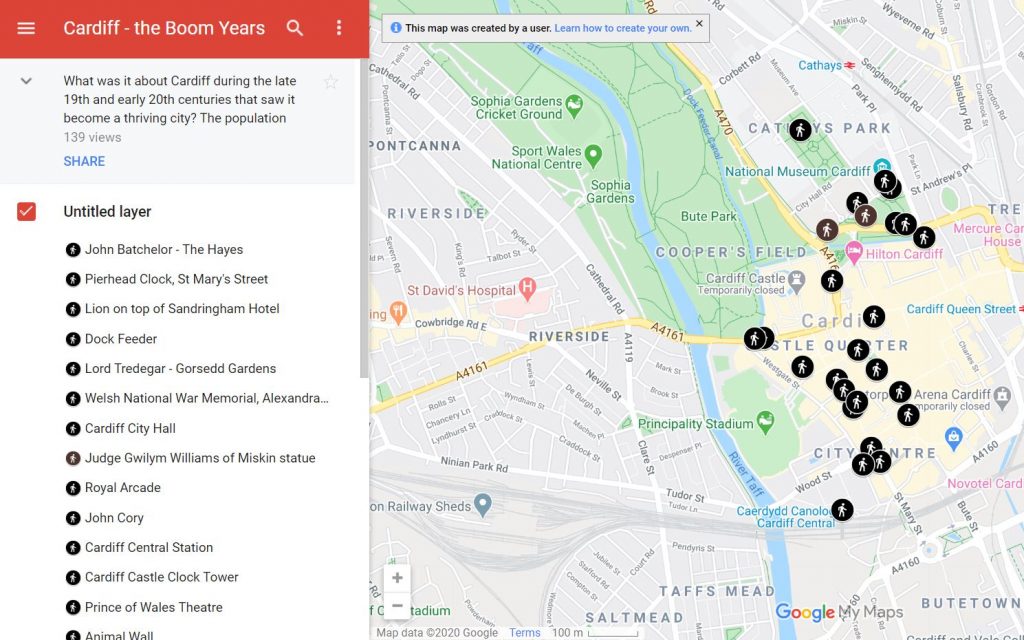
In order to salvage something from our efforts I have recently devised a Google map to include the material we researched and wrote. I have already shared the link with the U3A researchers and would now like to share it with members of this group. I would like to hear any comments you have on content or style etc so I can may be instigate improvements before making it available to all.
Here is the link: https://www.google.com/maps/d/edit?mid=1XZeLwbexn6Dq2Y_lntbB9UQqkb7C-et0&usp=sharing
The other place I have used a Google map extensively is on the Roath Local History website and in particular on the Roath Virtual War Memorial page. Again I would appreciate any comments you have. The page itself is beginning to get very long now and I need to start to thin somehow about putting the information on sub-pages. https://roathlocalhistorysociety.org/local-history/war-memorials/roath-virtual-war-memorial
Here’s just a reminder of how to devise your own map:
- Log into your Google account.
- Click on the nice dots next to your avatar in the top right.
- Click maps
- Click on the three lines on the top left of the screen
- Click Your Places
- Click maps
- Click create map
-
Jigsaws

I purchased a 1000 piece jigsaw just before lock-down from a charity shop for the princely sum of £2. It appeared to be complete, but after a week of frustration, I concluded there was a good reason why it only cost £2. So in the bin it went, and I thought of buying one online from Amazon. But at £15-£20 I decided to look elsewhere and found this free site, which gives you free access to a vast number of jigsaws.
You will not find any 1000 piece puzzles, but a lot of 100, 150 and some 200 pieces, which will provide some variation in your lock-down status.
HAVE FUN !
-
My first encounter with computers
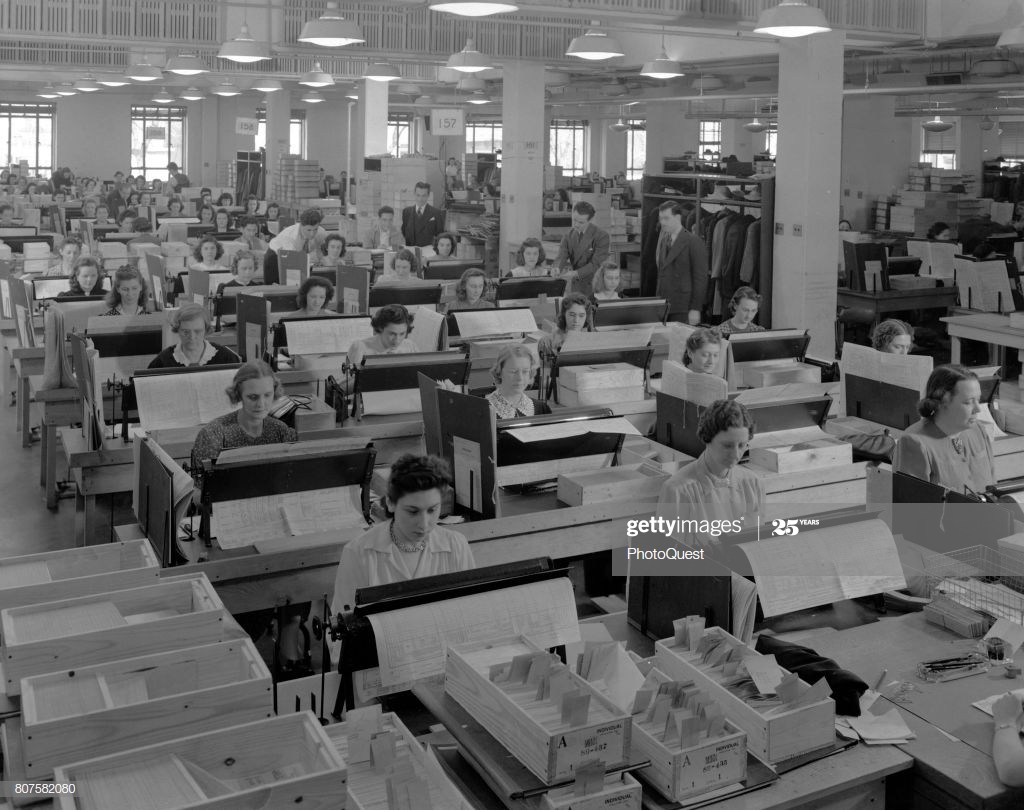
When I went to work in the Royal Insurance in Liverpool in 1962 they had installed a computer system to the building I worked in.
More than fifty people, mainly young girls, would enter information on punch cards in a large office on the first floor. These would then be taken to the computer room. This was a big room, which was kept at a certain temperature. There were no windows and it had a viewing gallery around it, as we had many visitors, who came to see what we were doing.
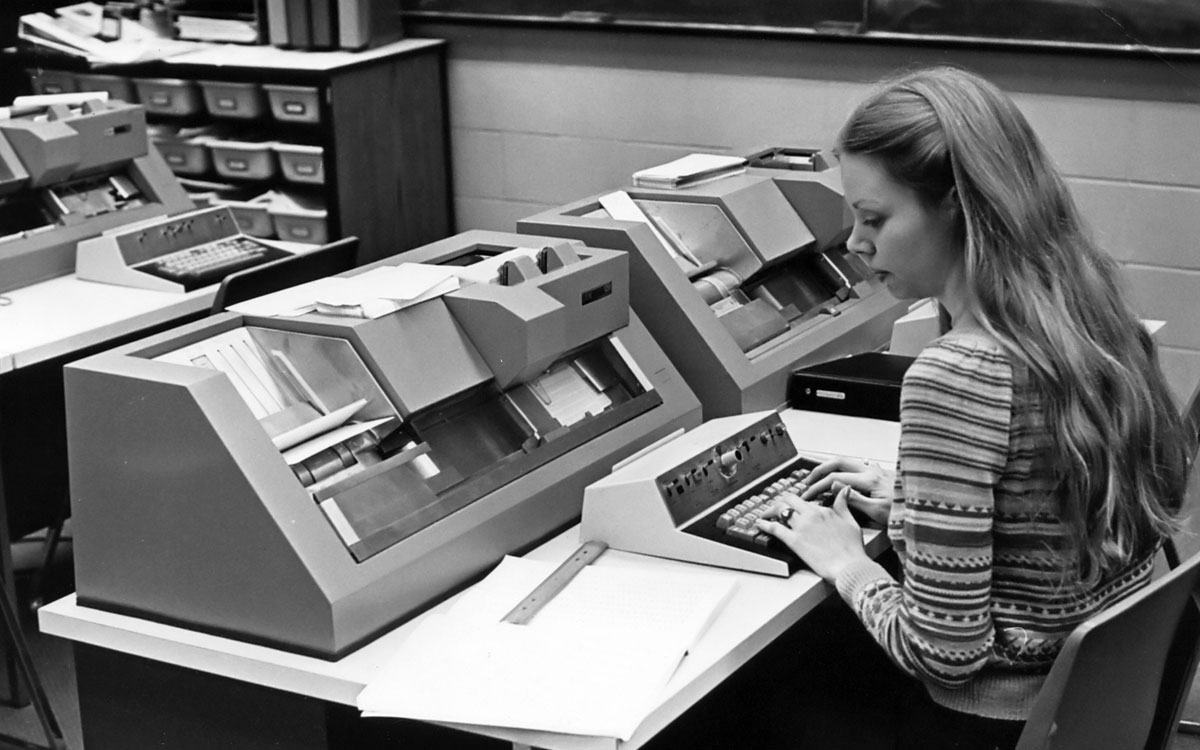
The room had a bank of collating machines, which sorted the punch cards and also a lot of printers. Off the main room was an office with some engineers, who serviced the machines and dealt with any problems, which were fairly frequent!
In a separate room there were about 20 programmers, who did the programmes for the machines and who thought of themselves as being a class apart!
I think that there were other machines in the main computer room but at a distance of over fifty years it is difficult to remember.
Anne Martin U3A, June 2020
-

My first encounter with computers
It seems I was relatively late entering the world of computing. For Christmas 1993 I treated myself to a Psion 3A, from Argos. This little marvel taught me about word processing, databases, spreadsheets, and even basic programming. The screen was black and white of course, and there was no web browser, but still… And the RAM? 256K! Not enough for even one small image these days.
I don’t remember when I first got to use a PC, but my first email, internal to the BBC and using my department’s log-in, was in April 1995. I got my own log-in two years later. In 1996 I got interested in writing web pages with HTML, which led to me having some formal training, getting involved with BBC Wales’ first web site, and then looking after my department’s pages on the Beeb’s intranet.
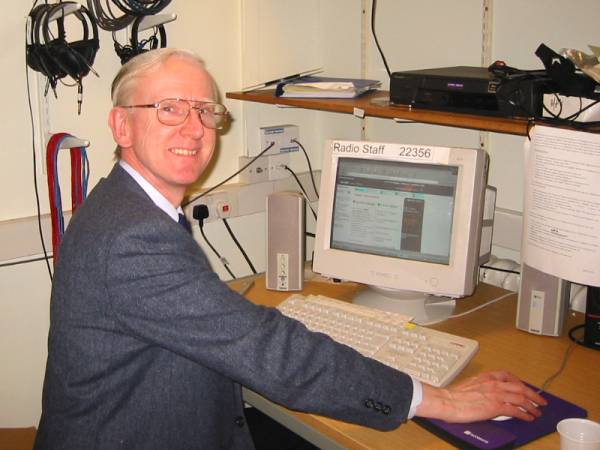
I didn’t get my first laptop until October 2007.
Jim Bartlett, June 2020
-
My first encounter with computers
I first became aware of computers in 1964 in the sixth from. As well as A level studies my school insisted that all sixth formers did a selection of other subjects according to their interests, abilities and possible usefulness for further studies or work. Those subjects, each two periods a week, were non specialist and usually an introduction to topics that one not otherwise cover.
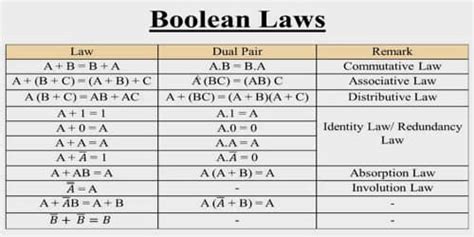
One of my chosen subjects was ‘Maths for Sixth Form’ – don’t ask why. Amongst other things, now forgotten, we did Venn diagrams, unheard of until then but now I believe staples of school maths, and touched on Boolean Algebra (not much idea then and none now!) and the binary system. As part of all this it was decided we should go on a ‘trip’ to the County Council Treasurer’s department in County Hall just down the road to view the computer. This was a main frame machine handling all the financial transactions, payroll etc. As I remember, there was not much to look at, just a big apparatus in a large room. We were given an explanation, pretty meaningless and long forgotten, and also a basic introduction to very simple Fortran, the machine’s programming language. We were each given a print out card to keep and I think I did hang on to mine for some time as a souvenir of seeing something very exciting and which would never concern me as it was clearly only for very clever, and probably male, boffins. More than the computer my clearest memory of the day is having a rather good free lunch in the staff canteen whilst my Father, an employee in a different department in County Hall looked across with his more staple paid for fare.
My university geography degree required passing a compulsory statistics course in which computing played no part. All calculations were done with books of log tables and working out formulae by paper and pen. I then became aware of computers in use when working as a local authority planner but in the 1970s they were not for us and a closed book being the concern of the highways engineers with whom we worked closely in the same building. My passive brush with computing continued, awareness but no involvement.
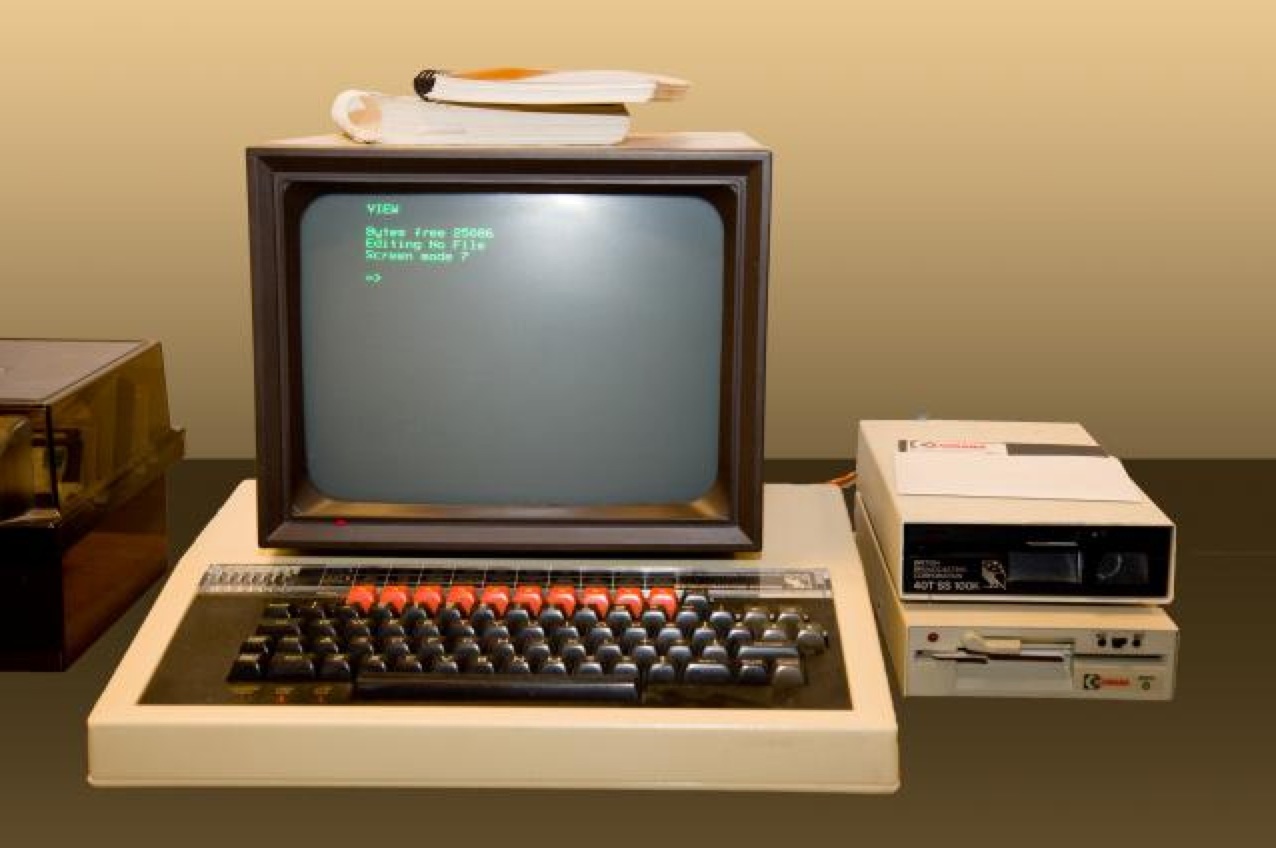
In the late 1980s it was decided that a home computer would be an asset for our secondary age children to assist with schoolwork and my husband selected and bought an Acorn BBC computer. I had no interest in it or knowledge, it was just something that sat in the spare bedroom on a special little computer table bought from Argos. I didn’t even know how to switch it on. It used discs, square hard things that lived in a special plastic box. I don’t think it was much more than a word processor – my husband typed out a Master’s degree thesis on it. I am informed that it may still be in our loft! (why?!). It was then time in the 1990s for me to learn how to use computers as they would be playing a more significant role in planning work. We were all sent on Council courses, at first for word processing only. I returned from my first stressed, vowing that I would never use one again as I couldn’t get the hang of it all and this thing called a mouse seemed to shoot out of control all over the place. Personal computers on desks were being rolled out gradually and you were given one when you were deemed able and responsible enough and your line of work merited it. Until then you had to go to the computer person in your department and ask them to do what you needed. Eventually computer use was second nature to us all for report and evidence writing, bypassing the typing pool into which work would disappear for days, statistical projections, site histories, e mails (internal only!), databases on numerous matters, and GIS (geographic information systems) and mapping applications.
I have now retired but enjoy using several computer devices for administration, social contact, photo processing etc. I have travelled a long way in 50 years from visiting my father’s work location to simply view a computer to seeing my children’s focus on computer and IT ability and use in their careers whilst my own ability and interest in computer use has developed.
Margaret Lewis, June 2020