Tag: 2020

  • My first encounter with computers

    My first encounter with computers

    I used SPSS a statistics package at university but all that involved was writing coding sheets and receiving back printouts of analyses so not what I’d call real computing at all.

    That came later in 1978 when I was working as a research assistant at Sheffield Poly as was. I was developing a reading test for school leavers and not only had data to analyse but also wanted to see if I could set up a computerised question banking system from which different tests could be extracted.

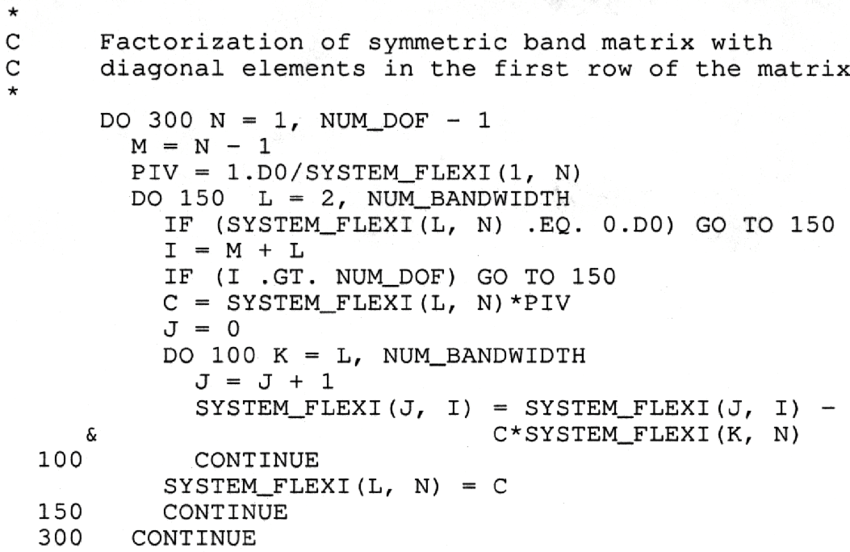
    The Computer Services dept were very helpful, listened carefully and then told me to go to the library, get out McCraken’s book on Fortran and do it myself. I taught myself Fortran and got on with it.

    I’m still programming – the calendars that appear on the U3A website for each group are derived from Beacon and added into Google Calendar using the Python programming language.

    Owen Parry, June 2020

  • My first encounter with computers

    My first encounter with computers

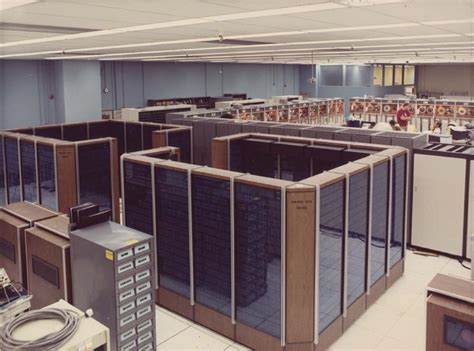
    As an undergraduate I’d never encountered computers so a new world opened up when I went to America as a postgrad in 1965. In my first term in the Geography Department at Northwestern University – in a northern suburb of Chicago – my supervisor decided that I should do a computing course in the Civil Engineering Department. He obviously didn’t realise that it was intended for postgrads who already had a ‘hard science’ degree.  The course concentrated on teaching postgrads to write programmes in machine language – Compass – for a CDC 3400 mainframe computer (not an IBM machine in sight). I’d never heard of Fortran before so didn’t know that I was writing something that Fortran compiled into a form – in this case Compass – which the computer could use.

    My first test: writing a program to find the maximum value of a set of numbers.  However, reading in the numbers and printing out the results had to be done using Fortran, so I learned things ‘in the right order’ – the computer would ‘understand’ me straightaway. Although the other postgrads had already learned to use Fortran  they then had ‘to progress’ to Compass.

    I bought an excellent teach yourself book on Fortran and was introduced to the world of ‘READ’, ‘DIMENSION’, ‘DO’ loop  and ‘GO TO’ statements! Just as important, Margaret, the wife of one of the other Geography postgrads from Grimsby, was a computer whizz kid.

    Like most postgrads at the time I had to prepare my own punched cards, a tedious process as you could enter up to 80 characters per card. And one typing error meant redoing the whole card. The Campus Computing Centre was a 10-minute walk away. I’d hand the deck of cards in and hope they were all in the right order and that there wasn’t a single typing error. Otherwise, when collecting results several hours later or the next day I just found a terse message – ‘input error 23 ’ or pure gobbledegook because I’d got the order of symbols wrong – as Margaret put it – the machine is trying ‘to obey your data’. Still, it was very satisfying to find that my programme (eventually) worked and gave the right answer. It seems amazing to me now what results you got from a mainframe machine with a memory capacity of just 196 kilobytes – about 20% of a Megabyte.

    After that, I never looked back, progressing to working with two American postgrads to write a programme simulating average queue lengths of traffic at a busy crossroads. It particularly makes me nostalgic to remember working with these two other guys – incredibly friendly from the outset, almost as if they’d known you all their lives, full of ‘get up and go’, not worried about seeming over-enthusiastic. Not at all like the much more reserved British – not better, but very different.

    The first computer Cathy and I had at home was a Tandon 286 desktop with a 20Mb hard disc – not a bad storage size for the time and, of course, ‘IBM compatible’. I think it cost around £1000.00 which was pretty expensive for the time – bought from a dealership in Slough – but worth every penny because we were’t supplied with computers at work until many years later. At least the computer techies in the Geography Department were very helpful if anything went wrong – I think they liked my enthusiasm.

    John Silk, June 2020
  • My first encounter with computers

    My first encounter with computers

    Sinclair ZX81

    My children were introduced to computing before I was. My daughter now 56 reminded me that she had one of these in 1982.

    I don’t believe I was ever aware of it.!


    Amstrad PCW8256

    My introduction to computers occurred in 1983 when I was sent to Bahrain to open an office for a project which I thought was for two weeks, but lasted for nearly five years.

    I ran a small two person office, just myself and a secretary, with occasional short visits by support staff from our Cardiff office.

    One of the engineers I worked with asked if I could look after his pc while he returned to the UK, for a month. The A/C in his villa would be turned off while he was away, and as my office had A/C he would like me to look after it until he returned. Bahrain temperatures in the summer are well over 100C

    I had no knowledge of computing, and was using traditional drawing board, tee square, set square scale rulers, typewriter, tracing paper, paper fax machine and telephone to run our office.

    So it sat on my desk for a month with only the occasional prod from me. The engineer colleague left no instructions how to use it !

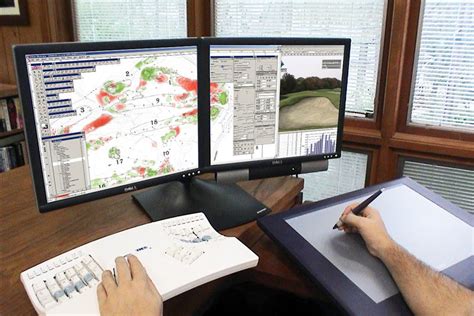
    Like the first station running AutoCAD

    In 1985 I was designing and building a headquarters for the Bahrain Oil Company, and when visiting their offices became aware of CAD (computer aided drafting) for the first time. 

    The organization being partly American had put individual pc’s on each engineers desk and were running the earliest versions of AutoCAD.

    I could see that this was going to be the future and the end of traditional hand drafting.

    So for the next year I used the opportunity in my spare time to work with one of their engineers to learn how to use a pc and AutoCAD.

    First Home Workstation

    In 1988 I was back in Cardiff, and given the task of spreading the gospel of computers and CAD into our UK offices.

    This gradually led me away from designing buildings, and instead developing systems, training architects and technicians in CAD, quality control and teaching my reluctant partners and staff to use computers and related software from CAD, word-processing, spreadsheets, and  project financial management systems

    To keep ahead of those I was teaching, I realised I needed a workstation at home. It was built by our then IT equipment supplier.

    And cost me in 1988 over £5K, much to my wife’s horror.

    In later years, I persuaded my office to fund the inevitable upgrades in software and hardware.

    At the time I hung up my boots in 2016, we were running seven UK offices all linked to a central network with my former computer technician now a full time computer manager.

    2D CAD has now become 3D. BIM. REVIT and all sorts of clever software to create architecture.


    But enthusing one day about the advantages of computers and CAD over hand drafting, a friend and fellow consulting engineer reminded me that he always admired my skill as an architect to pick up a 2B pencil and make a quick sketch of an idea, or detail.

    Don’t give up drawing was his message, and I confess that the architects I admire most are those that can draw well.  It is too easy to use a computer to create technically correct architectural dross!

    David Hughes, June 2020

  • My first encounter with computers

    My first encounter with computers

    My first encounter, in the very early 70s at U.C.Swansea, Applied Science / Mechanical Engineering,  was an ICL (maybe 1900E ? or was that a Car ?).

    It would run  FORTRAN and SORFOR (Southampton Fortran) using Punch cards. I also vaguely remember there being ALGOL and POP2.

    I wrote my programs,  punched the cards and then submitted them to the Computer Department twice weekly, before waiting excitedly and often disappointedly for the results – very often a syntax error… try again.

    You needed to get the Program correct so it would run properly, before you could actually submit the Data for your Calculations.
    The output came on a large wide roll of paper that you had to tear the holed edges off, and fold correctly.

    In my final year we could use a MOP (Multi Online Programming Terminal) that eliminated the cards, and you could book time to sit in a small room with the MOP and enter your own data, a very noisy experience I seem to remember. I did a programme for Stress analysis of a live Back axle for a car/ light van.

    Paul de Gues, June 2020

  • My first encounter with computers

    My first encounter with computers

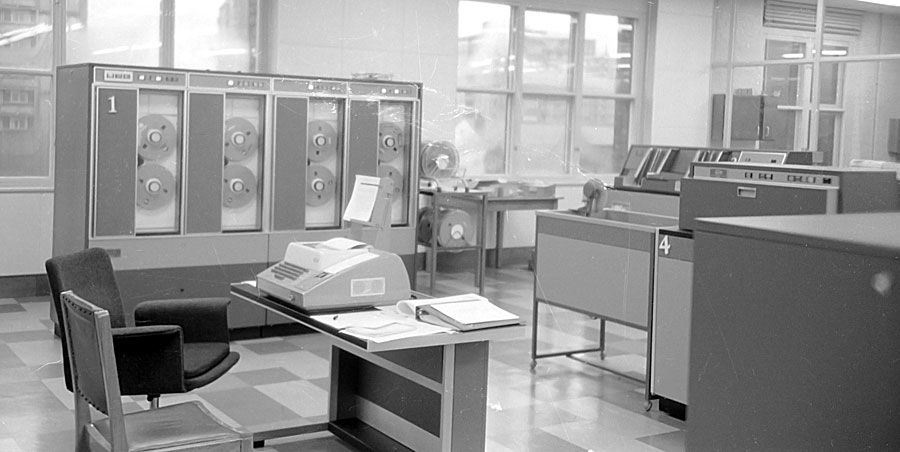
    My first encounter with computers was in 1975. I was then working as a highways engineer for Mid Glamorgan County Council. My team had an ICL mainframe computer which was housed in a very large room in County Hall, some 10 minutes’ walk away from our offices in Greyfriars Road. Our terminals in the office had no screens, so we had to send someone to fetch our print-outs from County Hall twice a day. This created a mountain of paper, and much of it was wasted because of simple errors. In those days we had no bespoke computer packages, we had to write our own software, and if we had a comma in the wrong place or a digit in the wrong column we had to start all over again. The first programming language I learnt was Fortran.

    One of our routine tasks was to collect traffic flow data from the entire highways network in the County. This was done by sensors on the road, such as pneumatic road tubes, or piezoelectric sensors or magnetic loops embedded in the road which transmitted the data to roadside cabinets. Every few weeks one of our team had to go and collect the punched tapes from the cabinets and bring them to the office to be analysed. The data obtained included traffic flows by hour, day, direction of flow, type of vehicle etc. This enabled us to design new roads using traffic flow projections some 30 years into the future. 

    This is just one example of programming developed in those early days of computing in the field of highways and transportation.

    Renée Martin, June 2020

  • Notes from Zoom Meeting – 4th June 2020

    Sit still, adjust your hair, mute your microphone …

    As well as a once round the participants opportunity for members to say what they’d been “up to” in a computing sense the past week, I asked them in the light of Margaret and Lizbeth’s moving posts on WhatsApp (see below) today to give examples of “a good use of technology”.

    Mike chipped in immediately to say – Zoom Meetings; so I had to admit that yes, it was a very good use of technology and it has the unforeseen benefit in getting more members participating in the meeting. So much so that I’m wondering whether ALL meetings of the Group should now be held using Zoom. [Don’t worry, I’m not!]

    John then added that Zoom as a one-to-one instructional assistant had proved to be very useful to him as he and I worked out a problem he was having with some software. This is indeed true and I can see that once the Covid-19 crisis is over we can all examine whether we can help solve each others problems with one-to-one Zoom calls.

    Sianed told us about virtual tours of properties up for sale, and Mike told us his last home was sold solely through a virtual tour, no home visit was undertaken by the purchaser. I thought this remarkable!

    I can’t remember who it was who said Wildlife Cameras (it might have been Jim) and yes, for us the purchase of such a camera has been very interesting, to say the least.

    Don came-up with an idea for a device to alert a household to the fact that a gas ring had been left on. In our house that would have saved a couple of saucepans over the years, especially those boiling eggs!

    Marilyn told us she’d been looking at triptychs and using the software Photoscape – another project for a rainy day, me thinks!

    Renee told us about meeting-up through Facebook/Messenger with an old school friend she’d not seen since she was 15 and what joy that now communicating with WhatsApp had brought to them. I related how I’d used Fb to track down a friend for a re-unuion that all my friends had lost contact with using Fb. Yes, Facebook is good for some things!

    Stella was interested in finding out whether she could connect her Bluetooth headphones to her TV and to her laptop. We pointed her to the work that Jim had done for Marilyn in setting that up for her TV. This then morphed into a discussion on whether using a 4G router in a house (as Jim has done) was a good alternative to a wired broadband connection. I think this needs more research, but it could be a horses for courses thing as much as a cost issue.

    David raised the problem of transferring large files that couldn’t be sent by email. Two solutions were offered (or three if you count sending the file on a small USB-stick by post). One was to use cloud storage as an intermediary, sharing a link to the file with the recipient in an email. This would work with Google Drive, One Drive, and Dropbox et al. The second option was to use a file-transferring service such as WeTransfer. For both situations, perhaps you also should consider zipping (compressing) the file as well. This can often be done by right-clicking on the file and saving the compressed (zip, or other format) file to send.

    Then we had a comfort break, and when that was over a large number had excused themselves as they had limited interest in video-editing which I went through using the post I’d written, ending with another one of my knee-shaking live demos which this time, I even recorded!

    This left the remaining 5 members with a lot of questions which I attempted to answer, one of which (from Don) was about using non-copyright music in videos. Ann answered this question with a reference to this website – Freeplay Music.

    Next time it’s “My first encounter with computing“. Even if you don’t want to join the Zoom Meeting, I’d love for as many of you as can to record their memories, either in a post, or in the Topic I’ve just created, or by sending me an email.


    Margaret & Lizbeth’s WhatsApp thread. Margaret wrote …

    I have had a different computer experience this afternoon although am not sure I would recommend it. But I report it for “technical interest”, if you can call it that.

    By invitation we attended a funeral transmitted from Cardiff to geographically distant family who are not allowed to travel here at this time and any friends such as ourselves who cared to ‘tune in’. It was done by webcam by a company doing this with entry to the service at a given time with ID and password that the family or its contact gives you.

    It was good that someones full life did not just drift away when more meaningful methods are not permitted but it was so sad to see just the next of kin and his household, outnumbered by the necessary staff. The tribute, music, homily and commital were all as one might expect but experienced virtually in a physically empty situation.

    In this case the deceased was elderly, in poor health for some time and like so many had succumbed to covidn19 in a home. I am sure that in his long and productive life he could never have dreamt of a televised end!

    Lizbeth replied …

    I was the celebrant at a similar ceremony a while ago. Very difficult for all concerned. But there will be another ceremony in the autumn when we can properly celebrate that life.

    This is certainly a time when technology serves us well.

    I replied …

    A lovely couple of messages. I’m sure you’re right. Your friend would not have expected such a ceremony, but it’s good that you’ll all meet to celebrate their lives when life gets back to “normal”. We had a different experience recently which was rather lovely in a strange sort of way. The husband of my son’s next-door neighbours, who we’ve got to know quite well, passed away from cancer and though it was a sudden ending to his life, his neighbours and friends lined the streets of the route to the crematorium and clapped the passing of his hearse. His son said his father would have been tickled pink to think he’d been treated as royalty.

    We also had the opportunity of attending our late dear uncle’s ceremony whilst we were on the other side of the world. Not the same, but we were pleased to be able to hear my sister deliver my words of tribute to him. Then again, whilst Jenny actually flew to Australia to be with our son when he became an Australian citizen, I was able to watch the proceedings from Cardiff and actually talk to the mayor who was the officiate.

    Yes technology can be a wonderful aid to life as we know it, and as we hope it will be.

    It was this conversation that gave me the idea of asking members “What’s a good use of Technology?”


  • Video-editing for Dummies

    Video-editing for Dummies

    … and I am talking about myself here!

    If I wanted to do video-editing and wasn’t doing “this U3A stuff”, I’d use Apple’s iMovie which is a “really nice and easy lemon squeezy” way of producing videos, but I can’t because for the Group it has to be cross-platform, and it has to be FREE!

    I have suggested using YouTube for simple editing and indeed with the new YouTube Studio that may be your best solution – especially if you’re intending to share the video on YouTube through your Google Account; Google provides some Help & Assistance on how to do some basic video-editing and provides a useful help page with a short video on how to do video-editing using YouTube Studio, and there’s a load of other YouTube videos on the subject as you might expect.

    However, not all of you have Google/YouTube accounts, and not all of you would want to “edit in the cloud”, so we need to find another solution that ticks all the boxes.

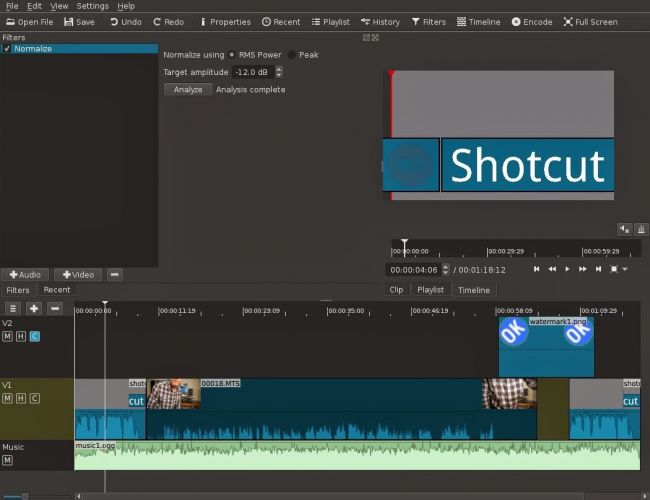
    The one I found that does just that, and which also has a substantial amount of Help and Support documentation and video tutorials is Shotcut.

    It’s a bit daunting when you first start it up; so many controls, icons, sliders, windows, options – but don’t let that put you off. Just try the basics to get started and then go back to learn more as you need it.

    Here’s a link to a “Getting started …” video, and here’s one to a “manual” which tells you more about video-editing and using Shotcut. If you want to print something out to have beside you as you learn how to navigate the interface, you might find this short (3-page) guide useful.

    Having created your video masterpiece you’ll want to save it in a format that is playable on most online services and applications – choose MPEG4 from the Export option – and then decide what you want to do with it. You can of course upload it to Google Photos – there’s no size limitation on videos you upload apart from the 15Gb per week that you get against your free storage limit – which is 15Gb!!!! You could use YouTube of course (see above) – but the quality of the video may be downgraded as you upload it; but I’d recommend you also look at Vimeo as it’s a more privacy-orientated platform for sharing videos and has a better-quality of video playback too. You can do quite a bit with a free subscription, but if you’re into video-production in  big way it might be worthwhile paying  £72 for an annual subscription. Alternatively, you could decide to host your own videos, on your own website – but that's for another day!

    … and that's about it – except for the dreaded live-demo!

    Recorded from Zoom, my first attempt. Not all the panes were showing, so I'm afraid the Timeline pane is not to be seen – it's at the bottom of the screen. I'll need to see if I can record the whole screen – not just the Window.

    [PS: I've now found out how to share the Desktop, rather than just a Window, so there's no stopping me now. Next time, next time …]



  • Questionable Broadband Speed

    You can check potential speeds available to your own Post Code using the Uswitch Postcode speed checker here:

    https://www.uswitch.com/broadband/postcode_checker/

    You can check your current speed and potential suppliers here:

    https://www.uswitch.com/broadband/speedtest/

    You should also contact your current supplier for potential problems with your Broadband, they can run online checks on your system.


  • The Demise of Flash

    Back in 2003 I was involved in a government project, The National Grid for Learning-Cymru. Our brief was to improve the use of I.T. in schools right across Wales. One of our main activities was to create a fantastic online learning repository, creating websites that were interactive and worked well on an interactive whiteboard. To that end, it felt as though every Monday morning, we were asked to leave our brains on the table whist our bosses sucked out all of our ideas. Seriously though, we actually created some quality material.

    Sadly, most pages were created using a technology called Flash. Back in 2003, Flash was indeed the bees knees. However, as the years have gone by, Flash has fallen out of fashion. It is to be taken off line at the end of the year and along with it, we will lose so much of the N.G.F.L.-Cymru material.

    During lockdown, I’ve been trying to ‘hoover up’ some of my best websites/ I’ve tried to re-present them for posterity in a non-Flash form. I’ll be honest, they aren’t a patch on the Flash versions but at least I have something to keep the memory alive.

    One of my best efforts was Frankenstein’s Model Theatre. This was a modern take on the old Victorian toy. Using it, you could create a play involving four moveable characters complete with special effects and sound effects.

    I’ve created a non-Flash version of the theatre here.


    http://www.tattyjacket.co.uk/Theatre/theatre.html

    Question is, does anybody know whether there will be a method to keep these old Flash sites alive after November?

  • Gr gr gr gr granny Rebekha

    Thought you might enjoy this story. My gr gr gr gr granny Rebekha lived on a farm right next to the site of these shipwrecks.

    https://theedwardsfamilytree.blogspot.com/2019/06/granny-rebekhas-shipwreck.html

    Phil

    — Forum Responses —

    Yes, I enjoyed reading your account. Like you, I’ve enjoyed “constructing” stories around events in my ancestor’s lives – filling-in the gaps so-to-speak. Factumentary you might call it, or Life Stories.

    David Harrison June 4, 2020 11:03 am